

Affiliated with Atlanta Primary Care, PC
Now offering DOT physicals: Learn more
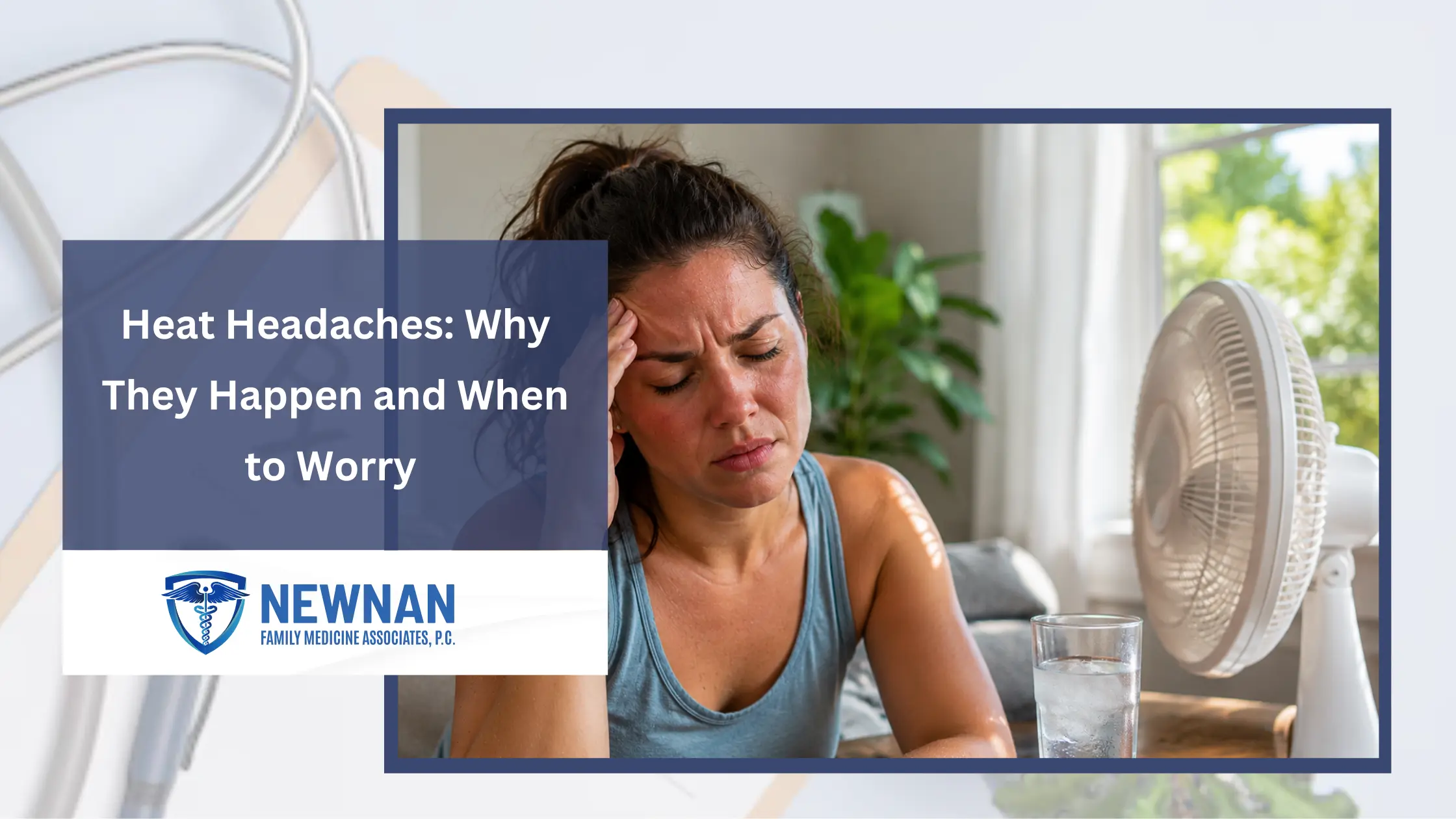



Hot weather can affect the body in unexpected ways, and headaches are one of the most common symptoms people experience during the summer months. Spending too much time in the sun, not drinking enough water, high humidity, and outdoor activities can all contribute to heat headaches, especially during periods of extreme heat.
While many heat headaches improve with rest, cooling down, and hydration, they can sometimes be a sign that the body is becoming overheated or dehydrated. Knowing what causes these headaches, how to relieve them, and when symptoms may require medical attention can help prevent more serious heat-related illness.
Let’s understand what causes heat headaches, how to relieve them, and when they may be a sign of something more serious.
Heat headaches are headaches triggered by exposure to high temperatures, dehydration, or overheating. They can develop after spending time outdoors, being in direct sunlight, or engaging in physical activity in hot weather.
Heat affects the body in several ways. As your body works harder to cool itself, you lose fluids and electrolytes through sweat. Blood vessels may expand, circulation can change, and dehydration may develop, all of which can contribute to headache pain.
Unlike a typical tension headache, heat-triggered headaches are often connected to environmental conditions and may improve once the body cools down and rehydrates.
Heat headaches often occur during everyday summer activities, including:
Even mild dehydration or overheating can be enough to trigger symptoms in some people.
Several factors contribute to heat headaches, and understanding these causes can help prevent them.
One of the most common causes is dehydration. Many people ask, “Can lack of water cause headaches?” The answer is yes.
When the body loses too much fluid through sweating, blood volume can decrease. Reduced blood flow and oxygen delivery to the brain may trigger headache pain. Dehydration headaches often worsen if fluids are not replaced quickly.
Sweating doesn’t just remove water, it also depletes electrolytes like sodium and potassium. These minerals help regulate nerve and muscle function. An imbalance can contribute to headaches, fatigue, dizziness, and muscle cramps.
A heat exhaustion headache is often one of the earliest warning signs that the body is struggling to regulate temperature properly.
Heat exhaustion develops when prolonged exposure to heat leads to excessive fluid loss and overheating. Without treatment, symptoms can become more severe.
Direct sunlight on the head and neck may also trigger headaches, especially in people prone to migraines. Bright sunlight and glare can increase sensitivity and contribute to throbbing pain.
Heat naturally causes blood vessels to expand in an effort to cool the body. For some people, these vascular changes can trigger headache symptoms, particularly migraines or throbbing headaches.
Heat headaches tend to show up as:
These symptoms are uncomfortable but not inherently dangerous, if you catch them early and respond.
Knowing where you fall on this spectrum is critical.
Stop waiting it out and seek help if:
1. Hydrate strategically. Plain water helps, but if you've been sweating heavily, add electrolytes. A pinch of salt and a squeeze of citrus in your water, or a low-sugar sports drink, works well.
2. Get out of the heat immediately. Air conditioning is ideal. Shade with airflow is the minimum.
3. Apply a cold compress. A damp cloth or ice pack on the forehead, back of the neck, or wrists cools blood passing near the surface and provides real, measurable relief.
4. Rest, horizontally. Lying down reduces the cardiovascular demand on your body and gives your blood pressure a chance to stabilize.
5. Avoid painkillers as the first move. NSAIDs can be hard on the kidneys when you're already dehydrated. Address the dehydration first; take medication only if the headache persists after proper rehydration.
Some individuals are more vulnerable to heat headaches and heat-related illness, including:
Extra precautions are especially important for these groups during extreme heat.
Summer heat can take a bigger toll on the body than many people expect, and headaches are often one of the earliest warning signs. Listening to those signals early, staying hydrated, and taking breaks from the heat can make a major difference. A little prevention and awareness can go a long way in avoiding more serious heat-related illness.
Persistent headaches, dizziness, dehydration, and fatigue during hot weather may be signs that your body is struggling to regulate heat properly. At Newnan Family Medicine, our team provides personalized care to help identify heat-related symptoms early and prevent more serious complications.
Schedule an appointment today and get the care you need to stay healthy, hydrated, and protected this summer.
1. What causes heat headaches in hot weather?
Heat headaches are commonly caused by dehydration, overheating, sun exposure, electrolyte imbalance, and changes in blood vessels due to high temperatures.
2. How can you tell if a headache is from heat exhaustion or something more serious?
A mild heat headache often improves with rest and hydration. Symptoms like confusion, vomiting, fainting, high fever, or worsening weakness may indicate heat exhaustion or heat stroke and require medical attention.
3. What are the fastest ways to relieve a heat headache?
Moving to a cool environment, drinking water or electrolytes, resting, and applying a cold compress can help relieve symptoms quickly.
4. When should you see a doctor for a heat-related headache?
You should see a doctor if headaches become severe, frequent, do not improve with hydration, or are accompanied by dizziness, vomiting, confusion, or fainting.
5. How can you prevent headaches during extreme heat?
Staying hydrated, avoiding peak sun hours, taking breaks in cool areas, and wearing protective clothing can help prevent heat headaches.


