

Affiliated with Atlanta Primary Care, PC
Now offering DOT physicals: Learn more
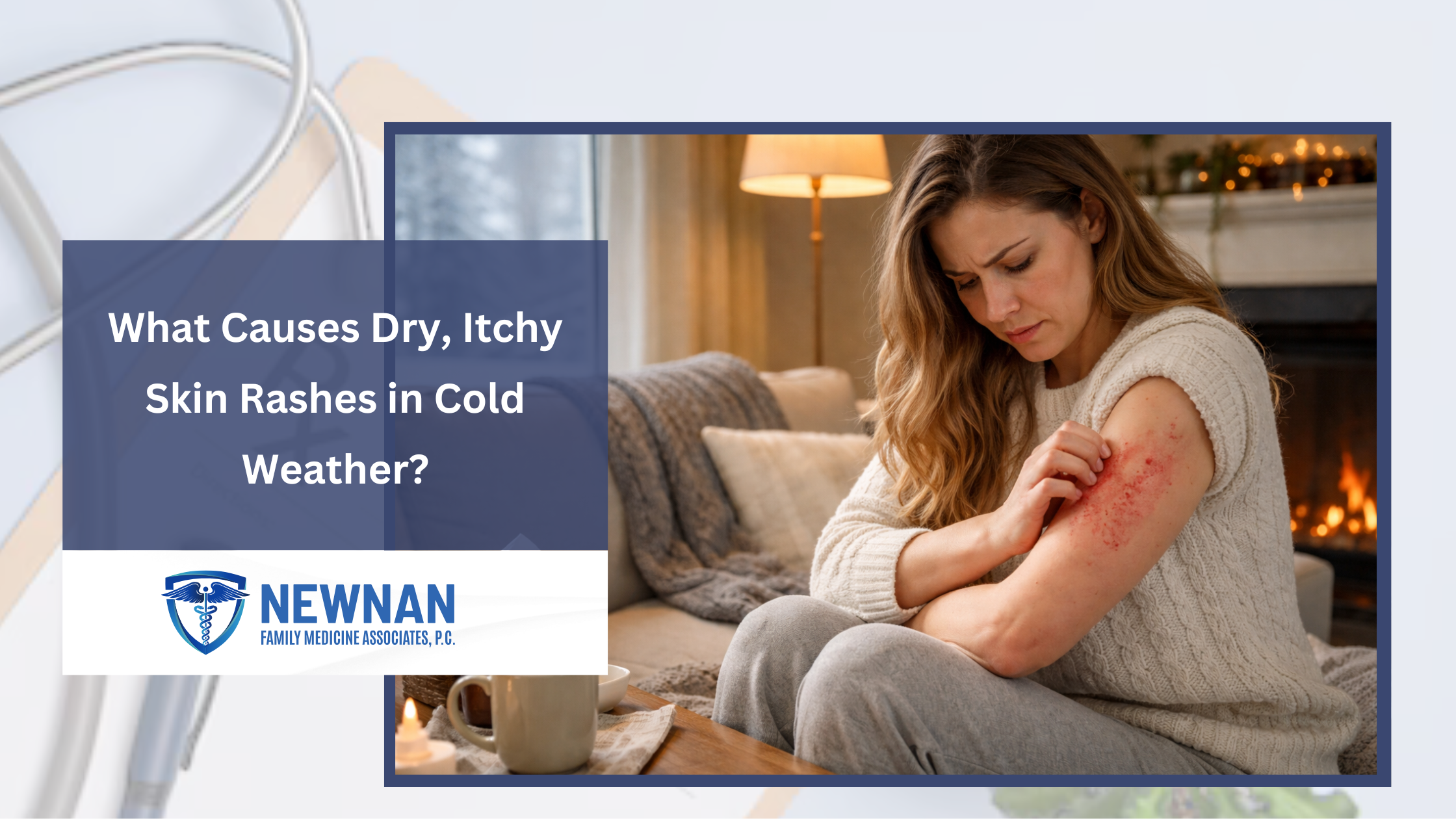



Winter conditions often disrupt the skin’s natural moisture barrier. Reduced humidity, indoor heating, and frequent exposure to cold air can strip the skin of essential oils, increasing the risk of itchy skin in cold weather and seasonal rashes. These changes commonly trigger winter skin problems, particularly in individuals with sensitive skin or preexisting conditions.
Understanding what causes cold-weather rashes, and how to manage them, can help prevent discomfort and protect long-term skin health.
Cold weather places significant stress on the skin’s natural protective barrier. One major factor is reduced humidity. Cold outdoor air holds less moisture, and indoor heating systems further dry the air, pulling water from the skin.
Hot showers, while comforting in winter, strip away natural oils that normally keep skin hydrated. Additionally, during colder months, the skin produces less sebum (natural oil), weakening its ability to retain moisture. These combined effects disrupt the skin barrier, leading to dryness, irritation, and inflammation, key contributors to many winter skin problems and skin rashes due to cold weather.
Not all winter skin issues are the same. Identifying the specific type of rash or condition can help you treat it more effectively.
This is the most common winter skin complaint. It typically presents as flaky, rough, and itchy patches. You will often notice it on your arms, legs, and hands, areas that are frequently exposed to the elements or prone to losing moisture quickly.
For those who already struggle with eczema (atopic dermatitis), winter can be particularly harsh. The cold air and dry indoor heat are classic triggers, leading to skin rash due to cold weather that is characterized by intense itching, redness, inflammation, and even painful cracking.
Winter fashion can sometimes be the enemy. Wool sweaters and synthetic fabrics can physically irritate the skin, causing contact dermatitis. Furthermore, heavy fragrances in detergents or soaps used to wash winter bedding can trigger red, irritated, and itchy areas.
Psoriasis often flares up in winter due to a lack of sunlight (UV rays can help clear psoriasis plaques) and the drying effects of the air. This results in thicker, silvery, scaly patches that can be difficult to manage without adjustment to your treatment plan.
While dry skin can happen anywhere, winter skin problems tend to concentrate in specific areas:
Several daily habits can worsen winter skin conditions:
Over time, these habits further weaken the skin barrier and prolong irritation.
Most winter rashes can be treated at home, but there are times when medical attention is necessary. You should consult a professional if you notice:
If you visit a dermatologist, diagnosis is usually straightforward. It typically involves:
Treating dry itchy skin in winter usually requires a multi-pronged approach:
Prevention is always better than cure. Adopt these habits to keep your skin happy:
Cold weather can be tough on your skin, but dry, itchy rashes don’t have to be part of the season. With the right skincare habits and early attention to symptoms, most winter-related rashes can be effectively managed. If irritation persists or worsens, seeking medical care can help prevent complications and restore skin comfort faster.
Don’t let winter dryness and itchy rashes take over your comfort. At Newnan Family Medicine, our experts can help diagnose, treat, and prevent cold-weather skin problems before they worsen. Whether it’s a simple moisturizer routine or managing a chronic condition, we’re here to keep your skin healthy, comfortable, and protected all season long.
Schedule your appointment today!
Most winter skin rashes result from dryness, irritation, or chronic conditions like eczema or psoriasis, which do not spread from person to person.
At night, skin loses more moisture, body temperature drops, and fewer distractions make itching sensations feel more intense and harder to ignore.
Insufficient hydration reduces skin moisture from within, making it more prone to dryness, flaking, and itching during cold, low-humidity winter months.
Aging skin produces less natural oil, making older adults more susceptible to dryness, irritation, and itchiness during colder months.
Seek medical care if a rash is persistent, painful, spreading, showing signs of infection, or accompanied by fever or swelling.


